
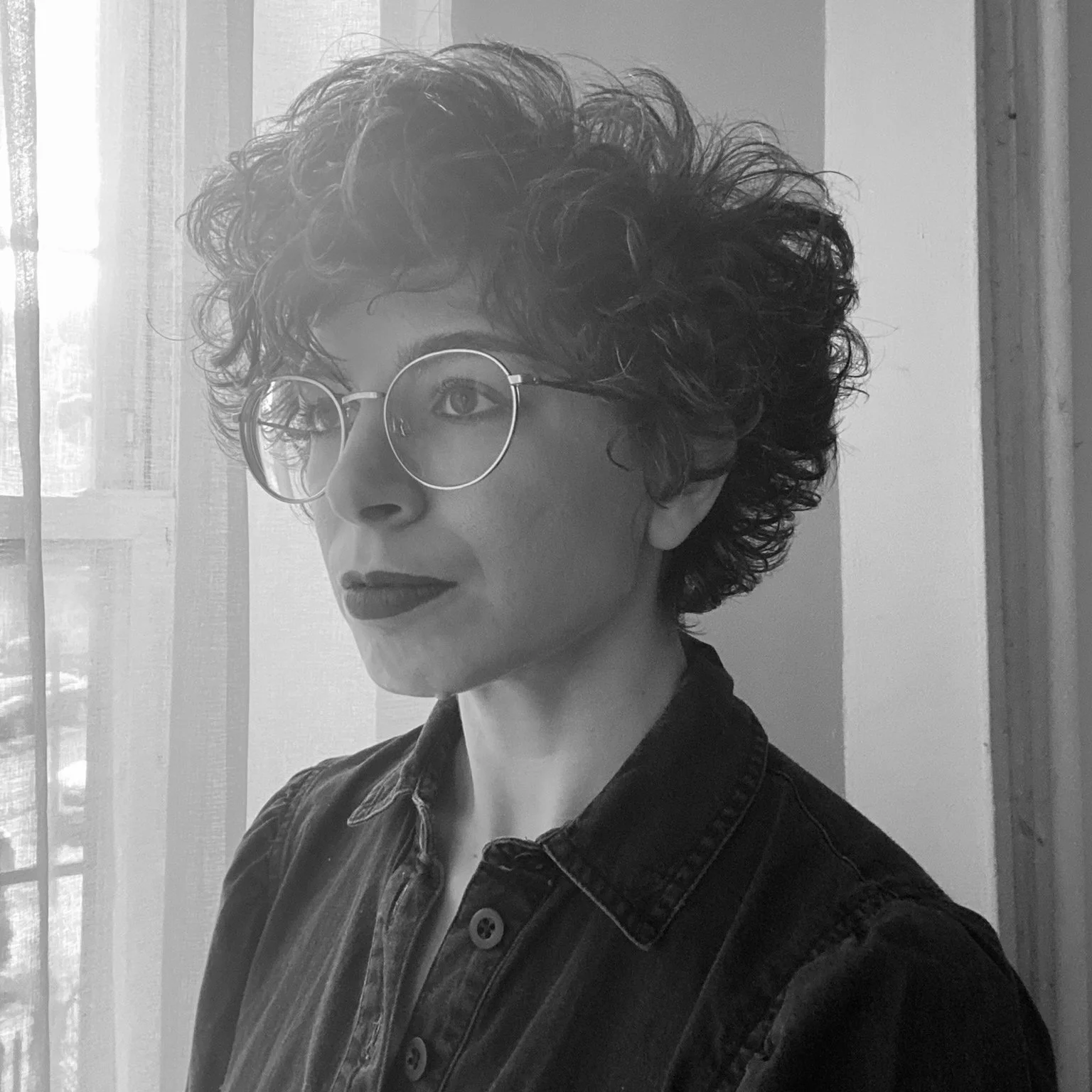
Hannah Aizenman
An Extravagance of Crows
Bio: Hannah Aizenman is a writer based in Brooklyn, New York. Originally from Birmingham, Alabama, she holds an MFA in poetry from New York University and a BA from the University of Pittsburgh. Her poems have been published by or are forthcoming with The Threepenny Review, the Academy of American Poets, Electric Literature, The Yale Review, The Iowa Review, and Birmingham Poetry Review. She works as deputy poetry editor at The New Yorker, and she serves as a vice chair on the Executive Committee of the NewsGuild of New York.
Statement: In ancient Rome, the practice of birdwatching was more than a diversion; it was a matter of great religious and civic significance. State priests known as “augurs” observed the flight patterns and calls of birds, among other natural phenomena, in order to divine omens and interpret the will of the gods. This ritual directly informed political, economic, and military decisions, but it also served to translate seemingly random events into legible messages and narratives, conveying a sense of cosmic order.
Ancient Rome is a long way from twenty-first-century Pittsburgh, but I thought of the augurs while watching the short film “An Extravagance of Crows,” which documents the movements of a murder of crows against a sky darkening with nightfall in the latter city. The camera is still, but the birds, whose numbers swell and ebb, swoop balletically over the buildings and trees within the frame, crying out to one another. I can imagine identifying in this hypnotic choreography some portent, evidence of a grand design governing existence—but, in our chaotic, hypertextual, conspiracy-theory-ridden age, there seems to me something beautiful and necessary in resisting the impulse to assign meaning to every flap of a wing, to convert every cloud into an element of the human story. What happens to these signs if they are released from the constraining systems of symbolism? What happens to us if we admit that we cannot predict the future, that the world is ultimately indecipherable? Is such a thing even possible? In this attempt at anti-augury, as it were, uncertainty prevails; perhaps apocalypse is unleashed—but maybe, too, an opportunity arises to explore alternative modes of being and relating.
The more times I revisited the film, the more I noticed aspects other than the crows. A light suddenly illuminating a window of the apartment building atop which the birds perch struck me as a reminder of the domestic sphere, the small, persistent ceremonies according to which life plays out amid or beneath larger dramas—environmental, historical, spiritual. That light seemed to correspond, somehow, to a twinkling celestial object, a star or a planet, that grows brighter in the distance as the dusk deepens, hinting at a greater scale of space and time than even birds—the freest of all creatures—can access. And the changing color of the firmament—imperceptible from instant to instant, and then appearing to have happened all at once—reminds of the mystery that provides the backdrop for everything: the relentless passage of time, the eternal state of transition from today to tonight to tomorrow.